5q35.2-q35.3 Copy Number Variation
Description
DeletionDuplication
A deletion in the chromosomal region 5q35 can cause the rare genetic disorder Sotos syndrome. Sotos syndrome is characterised by psychiatric disorders (autism, intellectual disability, developmental delay) and excessive growth. Also, duplication of 5q35 has been recorded.
- Region size (GRCh37)
- 1.33 Mb (GRCh38: 1.33 Mb)
- Genes in region
- 36 (36 protein-coding)
- Data version
- v_2026-10-22
Genomic location
Coordinates:
Disorder information from Orphanet
Deletion 5q35 refers to the different congenital malformation syndromes resulting from deletions of variable extent of the terminal part of the long arm of chromosome 5 (5q), spanning the region from 5q35.1 to 5q35.3 . The most significant anomaly is a recurring deletion in 5q35.2 comprising the NSD1 gene that causes Sotos syndrome that is characterized by cardinal features including excessive growth during childhood, macrocephaly, distinctive facial gestalt and various degrees of learning difficulty. Subtelomeric deletions of the terminal 3.5 Mb region on 5q35.3 are very rare, characterized by prenatal lymphedema with increased nuchal translucency, pronounced muscular hypotonia in infancy, borderline intelligence, postnatal short stature due to growth hormone deficiency, and a variety of minor anomalies such as mildly bell-shaped chest, minor congenital heart defects and a distinct facial gestalt. Larger deletions including bands 5q35.1, 5q35.2 and 5q35.3 cause a more severe phenotype that associates severe developmental delay with microcephaly, and significant cardiac defects (e.g. atrial septal defect with/without atrioventricular conduction defects, Ebstein anomaly, tetralogy of Fallot) linked to haploinsufficiency of NKX2.5 (5q35.1). Various combinations of signs may result from deletions of variable extent depending on the genes comprised in the deleted segment.
| Obligate (100%) | Very frequent (99–80%) | Frequent (79–30%) | Occasional (29–5%) | Very rare (<4–1%) | Excluded (0%) |
|---|---|---|---|---|---|
| - | - | - | - |
A rare partial duplication of the long arm of chromosome 5 characterized by low birth weight, developmental delay, intellectual disability, microcephaly, short stature, and behavioral problems. Variable digital, urogenital, cardiac and gastrointestinal anomalies can sometimes occur, as well as variable unremarkable facial dysmorphism. Other signs migh include vision/eye anomalies and delayed bone age.
| Obligate (100%) | Very frequent (99–80%) | Frequent (79–30%) | Occasional (29–5%) | Very rare (<4–1%) | Excluded (0%) |
|---|---|---|---|---|---|
| - | - | - |
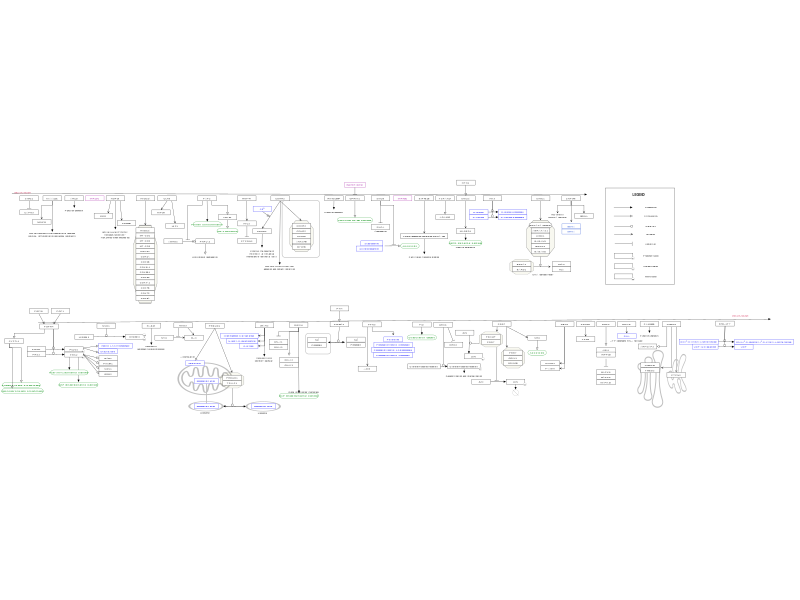
Molecular pathway
Gene information
Genes marked ● are also in the molecular pathway.
| HGNC | Gene name | Locus group | NCBI | Ensembl | UniProt | OMIM |
|---|---|---|---|---|---|---|
| SIMC1 ● | SUMO interacting motifs containing 1 | protein-coding gene | 375484 | ENSG00000170085 | Q8NDZ2 | 618102 |
| KIAA1191 ● | KIAA1191 | protein-coding gene | 57179 | ENSG00000122203 | Q96A73 | |
| ARL10 ● | ARF like GTPase 10 | protein-coding gene | 285598 | ENSG00000175414 | Q8N8L6 | |
| NOP16 ● | NOP16 nucleolar protein | protein-coding gene | 51491 | ENSG00000048162 | Q9Y3C1 | 612861 |
| HIGD2A ● | HIG1 hypoxia inducible domain family member 2A | protein-coding gene | 192286 | ENSG00000146066 | Q9BW72 | 620788 |
| CLTB ● | clathrin light chain B | protein-coding gene | 1212 | ENSG00000175416 | P09497 | 118970 |
| FAF2 ● | Fas associated factor family member 2 | protein-coding gene | 23197 | ENSG00000113194 | Q96CS3 | 616935 |
| RNF44 ● | ring finger protein 44 | protein-coding gene | 22838 | ENSG00000146083 | Q7L0R7 | 619283 |
| CDHR2 ● | cadherin related family member 2 | protein-coding gene | 54825 | ENSG00000074276 | Q9BYE9 | 619713 |
| GPRIN1 ● | G protein regulated inducer of neurite outgrowth 1 | protein-coding gene | 114787 | ENSG00000169258 | Q7Z2K8 | 611239 |
| SNCB ● | synuclein beta | protein-coding gene | 6620 | ENSG00000074317 | Q16143 | 602569 |
| EIF4E1B ● | eukaryotic translation initiation factor 4E family member 1B | protein-coding gene | 253314 | ENSG00000175766 | A6NMX2 | |
| TSPAN17 ● | tetraspanin 17 | protein-coding gene | 26262 | ENSG00000048140 | Q96FV3 | 620446 |
| UNC5A ● | unc-5 netrin receptor A | protein-coding gene | 90249 | ENSG00000113763 | Q6ZN44 | 607869 |
| HK3 ● | hexokinase 3 | protein-coding gene | 3101 | ENSG00000160883 | P52790 | 142570 |
| UIMC1 ● | ubiquitin interaction motif containing 1 | protein-coding gene | 51720 | ENSG00000087206 | Q96RL1 | 609433 |
| ZNF346 ● | zinc finger protein 346 | protein-coding gene | 23567 | ENSG00000113761 | Q9UL40 | 605308 |
| FGFR4 ● | fibroblast growth factor receptor 4 | protein-coding gene | 2264 | ENSG00000160867 | P22455 | 134935 |
| NSD1 ● | nuclear receptor binding SET domain protein 1 | protein-coding gene | 64324 | ENSG00000165671 | Q96L73 | 606681 |
| RAB24 ● | RAB24, member RAS oncogene family | protein-coding gene | 53917 | ENSG00000169228 | Q969Q5 | 612415 |
| MXD3 ● | MAX dimerization protein 3 | protein-coding gene | 83463 | ENSG00000213347 | Q9BW11 | 609450 |
| PRELID1 ● | PRELI domain containing 1 | protein-coding gene | 27166 | ENSG00000169230 | Q9Y255 | 605733 |
| LMAN2 ● | lectin, mannose binding 2 | protein-coding gene | 10960 | ENSG00000169223 | Q12907 | 609551 |
| RGS14 ● | regulator of G protein signaling 14 | protein-coding gene | 10636 | ENSG00000169220 | O43566 | 602513 |
| SLC34A1 ● | solute carrier family 34 member 1 | protein-coding gene | 6569 | ENSG00000131183 | Q06495 | 182309 |
| PFN3 ● | profilin 3 | protein-coding gene | 345456 | ENSG00000196570 | P60673 | 612812 |
| F12 ● | coagulation factor XII | protein-coding gene | 2161 | ENSG00000131187 | P00748 | 610619 |
| GRK6 ● | G protein-coupled receptor kinase 6 | protein-coding gene | 2870 | ENSG00000198055 | P43250 | 600869 |
| PRR7 ● | proline rich 7, synaptic | protein-coding gene | 80758 | ENSG00000131188 | Q8TB68 | 618306 |
| DBN1 ● | drebrin 1 | protein-coding gene | 1627 | ENSG00000113758 | Q16643 | 126660 |
| PDLIM7 ● | PDZ and LIM domain 7 | protein-coding gene | 9260 | ENSG00000196923 | Q9NR12 | 605903 |
| DOK3 ● | docking protein 3 | protein-coding gene | 79930 | ENSG00000146094 | Q7L591 | 611435 |
| DDX41 ● | DEAD-box helicase 41 | protein-coding gene | 51428 | ENSG00000183258 | Q9UJV9 | 608170 |
| FAM193B ● | family with sequence similarity 193 member B | protein-coding gene | 54540 | ENSG00000146067 | Q96PV7 | 615813 |
| TMED9 ● | transmembrane p24 trafficking protein 9 | protein-coding gene | 54732 | ENSG00000184840 | Q9BVK6 | 620436 |
| B4GALT7 ● | beta-1,4-galactosyltransferase 7 | protein-coding gene | 11285 | ENSG00000027847 | Q9UBV7 | 604327 |
Evidence
- Loading citation... [PMID: 33389145]
- Loading citation... [PMID: 36458506]
- Loading citation... [PMID: 8092192]
- Loading citation... [PMID: 15942875]